A dashboard screenshot cannot explain whether an analysis is trustworthy. A useful project entry names the question, the data preparation, and a check on the result. The worked example below shows how to describe an analytical contribution without inventing business impact.
The short answer
Describe the question, dataset context, preparation, analysis, and result you produced. Include a check or limitation you can explain. A report or dashboard is an output; a claim that it increased sales or reduced costs needs separate evidence. Label practice and academic datasets clearly.
See the worked exampleWorked example: separate analysis output from commercial impact
Suppose you built a sales dashboard from a practice dataset. You cleaned dates, joined tables, and compared the totals with the source before presenting monthly trends. That demonstrates work you can explain. It does not establish that a real business changed a decision or increased revenue because of your dashboard.
Keep the entry centred on the question and the work. If a join changed totals unexpectedly, explain the check and correction in your project notes. For a CV, choose a concise validation detail and leave the full method in an accessible report or repository.
Start with the question rather than the dashboard
Name the problem the project addressed. Comparing demand by day, investigating incomplete records, and summarising survey responses are different tasks even if they use the same software. Explain who the output was intended for, including when it was only a learning exercise.
Choose projects that relate to the vacancy. If the role involves regular reporting, a project with clear definitions and repeatable checks may be more relevant than a visually impressive chart with little explanation. Do not add a project simply to include another tool name.
Show preparation, checking, and communication
The National Careers Service's analyst-statistician profile covers organising data, checking quality, analysing patterns, and presenting findings. That suggests a useful way to review a project entry: can the reader see those stages where you performed them? The profile covers varied roles, so it is context for choosing evidence, not a checklist of mandatory tools.
Keep confidential data out of public portfolios and CV attachments. Use an approved public dataset, synthetic demonstration data, or an appropriate description of private work. Do not publish real employer records simply because a project needs a link.
Sources: National Careers Service: Data analyst-statistician role
Include a check on the result
Describe a verification step you can explain: comparing totals before and after a join, checking a sample of records, reconciling categories, or reviewing how filters change a chart. This tells the reader something about your approach to reliable work.
Avoid saying that analysis proved a cause when it only showed an association or a pattern in a limited dataset. If a project used a small sample, incomplete records, or artificial data, keep the limitation visible. An honest interpretation gives a stronger basis for a technical interview.
Separate what you produced from business impact
A dashboard, report, query, or documented analysis is an output. A change in sales, time, or cost is an impact that needs evidence and context. If nobody used the learning project to make a business decision, do not assign it a commercial outcome.
For real workplace projects, distinguish your part from the wider team's result. Use a measured figure only when you know its source and can share it. Otherwise, explain the report's audience and purpose, which can still make the work understandable.
Connect projects to skills and work history
MIT recommends reinforcing named skills by showing them in experience descriptions. For an analyst application, our practical adaptation is to connect a tool to the preparation, analysis, or reporting step you performed. If you add a portfolio link, provide a readable explanation so the reviewer can understand the project without running its code.
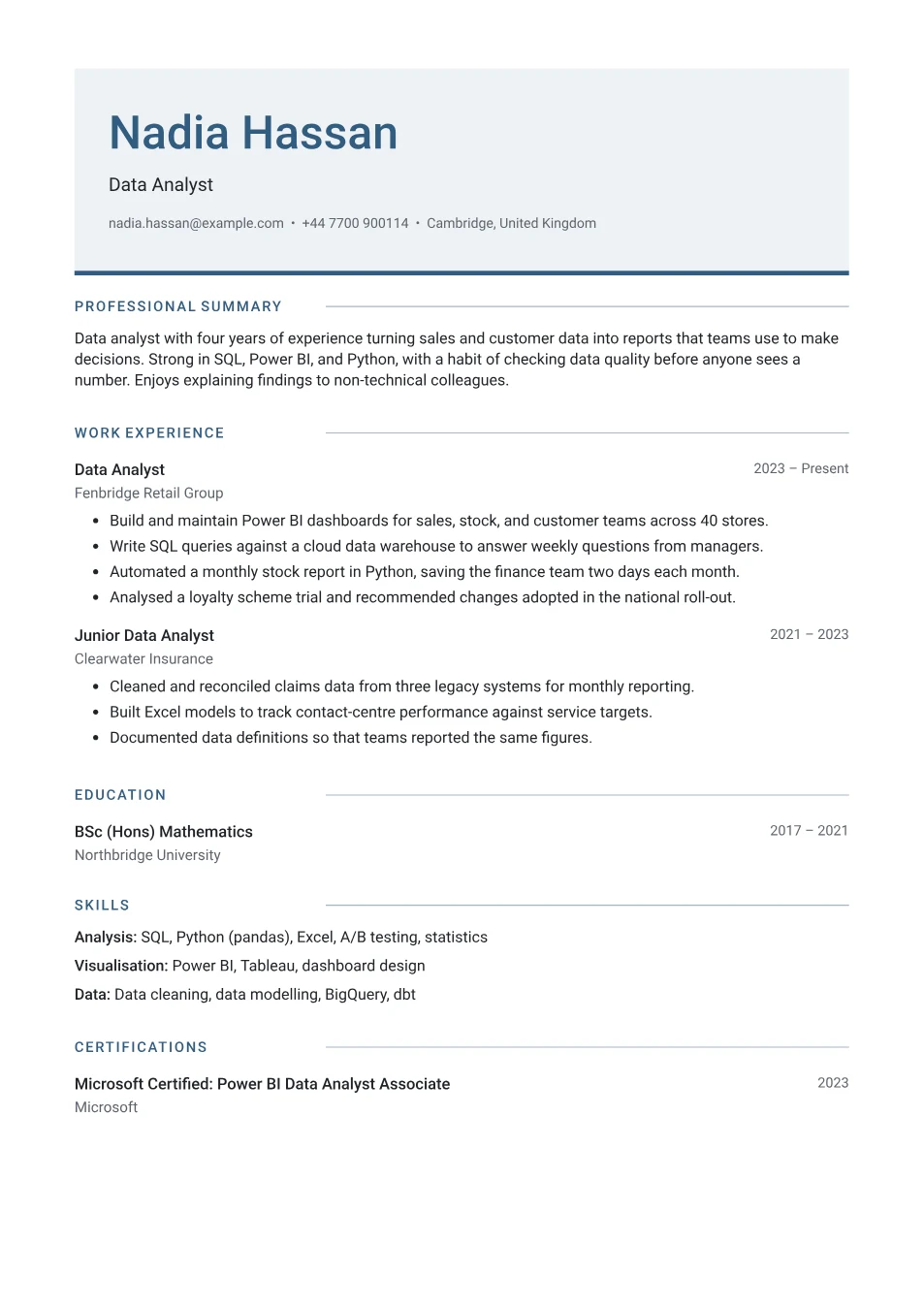
Start with the data analyst CV example and use the bullet builder to make a line direct. For a graduate application, the graduate CV checklist helps arrange education and projects around the role.
Sources: MIT CAPD: Resumes
Check your analysis project entry
- The question and dataset context are stated.
- You describe a preparation or validation step you performed.
- A chart or report has a clear intended audience or purpose.
- Limitations and demonstration data are identified where relevant.
- Business-impact figures are supported rather than inferred from a dashboard.
Frequently asked questions
Can a practice dataset project go on a data analyst resume?
Yes. Label it as a personal or academic project, explain the work, and avoid implying that it had a real commercial client or outcome.
Do I need to use every tool from the job advert?
No. Show relevant tools you actually know, explain your level through examples, and do not claim experience with software you have not used.
Sources and further reading
Sources checked on . Examples are fictional; practical suggestions are Folio's own application of the guidance.