An internship CV is read differently from a CV for an experienced role. Recruiters know you are early in your career, so they look for potential: a genuine interest in the field, evidence that you can learn quickly, and the basic skills to contribute from the first week. Your education, projects, and activities are where that evidence lives.
What internship recruiters look for
Most internship applicants have similar education, so the details make the difference. Recruiters look for relevant modules or projects, signs of initiative such as a society role or a side project, and the everyday professional skills that make an intern easy to work with: communication, organisation, and reliability.
They also need practical details: when you graduate, when you are available, and, for some roles, whether you are eligible to work in that country.
The best structure for an internship CV
Put your strongest evidence first. For most students, that means education and projects before work experience. Keep it to one page.
- Contact details, plus a LinkedIn profile, portfolio, or GitHub link if it is relevant and up to date.
- A short objective or profile naming the internship you want.
- Education: degree, institution, expected graduation date, relevant modules, and grade if it helps.
- Projects: coursework, competitions, and personal projects related to the field.
- Experience: part-time jobs, volunteering, and society roles.
- Skills: software, technical skills, and languages.
Open with a focused objective
A two-sentence objective tells the recruiter exactly what you are applying for and why you are a credible candidate. Name the field or the company, mention one or two relevant skills, and include your availability if the internship runs at a fixed time.
The free resume objective generator builds three drafts from your details that you can edit.
Make your education do more work
List your degree with its expected graduation date, then add the details that relate to the internship: two or three relevant modules, a dissertation or major project, scholarships, and awards. Include your grade if it is strong, for example a predicted 2:1 in the UK or a GPA in the US.
If you are still at school or college, list your current qualifications with predicted grades and any relevant subjects.
Turn coursework and projects into evidence
Projects show what you can actually do. Describe each one with what you made, the tools or methods you used, and what came of it, and say what your part was in group work. Our guide to describing projects on a CV has examples and a simple formula.
Tailoring for different fields
Recruiters in each field look for slightly different signals.
Technology
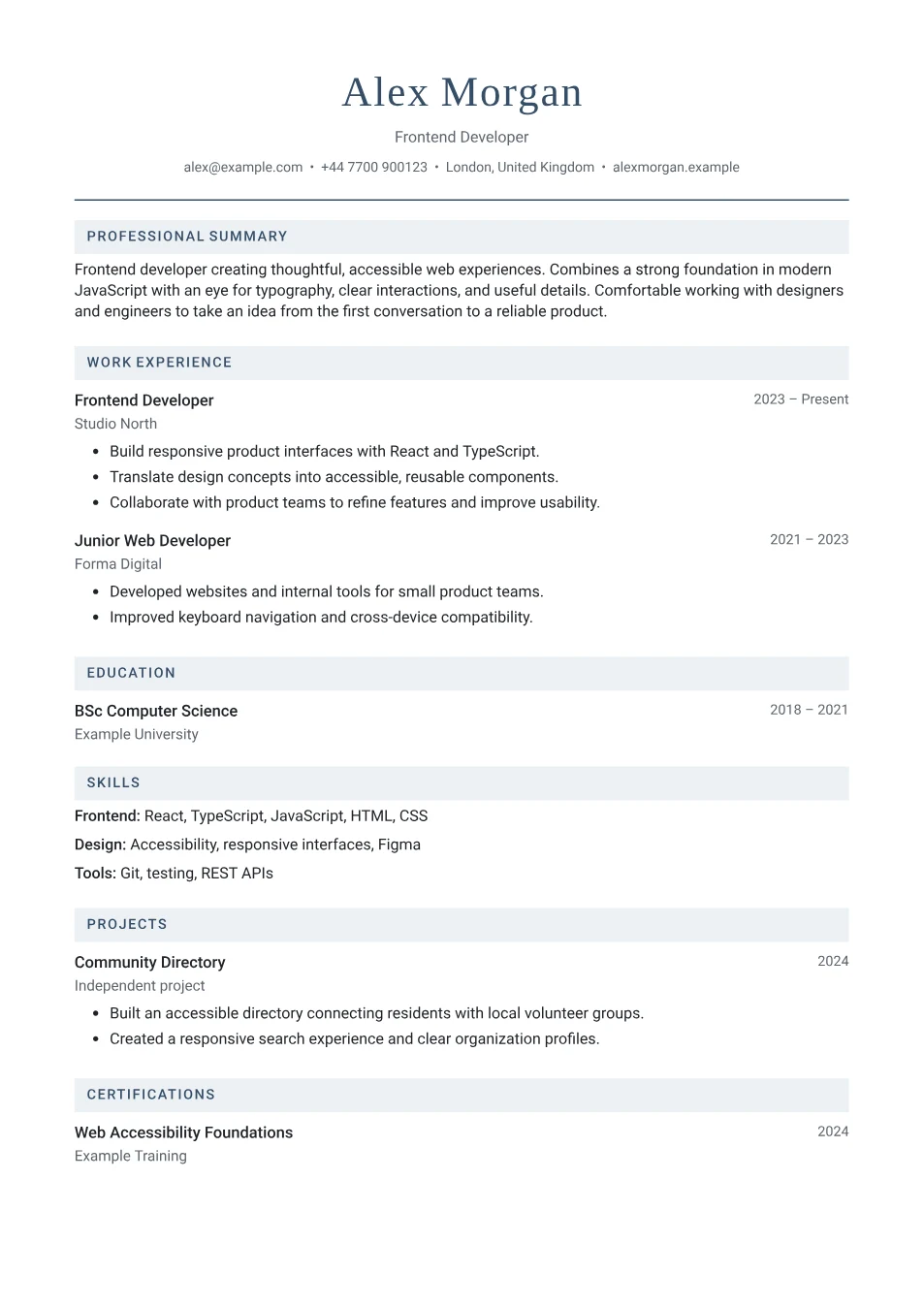
Group your technical skills by area, link to a tidy GitHub profile or portfolio, and describe one or two projects in detail. The frontend developer and software developer CV examples show how.
Business, finance, and consulting
Highlight Excel and analysis skills, case competitions, and any society role where you managed money, events, or a team.
Marketing, media, and design
Link to a portfolio, and name accounts, campaigns, or publications you have worked on, with honest results such as audience growth.
Science and engineering
List laboratory techniques, software, and safety training, and describe practical projects with the methods you used.
Dates, availability, and eligibility
Make it easy to see when you can start and finish. Include your expected graduation date, and the period you are available if the internship has fixed dates.
If you are an international student, check whether the internship needs work authorisation or a visa, and answer the employer’s questions accurately. Our UK, US, Canadian, and Australian guides explain local conventions.
Frequently asked questions
How long should an internship CV be?
One page. Recruiters read many applications, and a focused page with your most relevant evidence is easier to assess.
Should I include my grades on an internship CV?
Include them if they are strong or the employer asks for them, for example a predicted degree classification in the UK or a GPA in the US.
What if I have no work experience at all?
That is common for internship applicants. Lead with education and projects, then add volunteering, society roles, and part-time work. See how to write a CV with no experience.
Do I need a cover letter for an internship?
Often, yes. A short letter explaining why you want this internship and what you would bring helps you stand out. The cover letter maker has a student and graduate template.