For casual and first-job applications, a clear statement of what you can do and when you can work is more useful than a crowded page of generic strengths. Build the resume around your actual activities, study commitments, and the advertised duties. The example below shows how to make that information specific.
The short answer
Include relevant education, paid or unpaid experience, practical skills, and genuine availability where it helps with the advertised shifts. Distinguish study periods from breaks when necessary. Keep training and eligibility information accurate and check any current requirements through the appropriate official source.
See the worked exampleWorked example: make availability and service evidence specific
Suppose a student wants a casual role with evening and weekend shifts. Their draft says fully flexible, but classes prevent them working two evenings. Replace that claim with the availability they can maintain. Then choose a real activity that shows relevant communication or practical work.
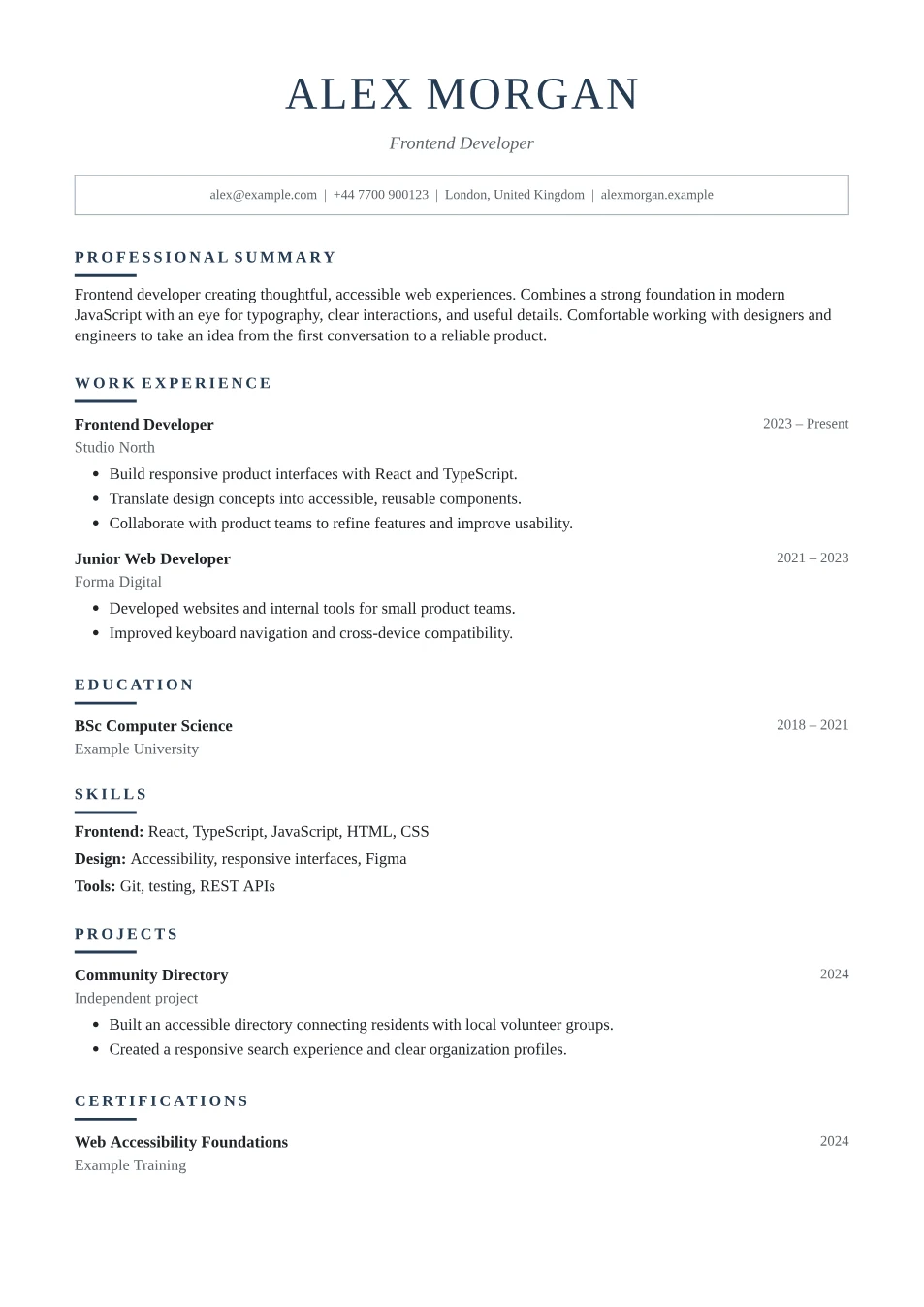
The example separates the timetable from the evidence so an employer can understand both. Update the availability when the semester changes. If the advert requires training you have not completed, do not copy a certificate from a sample resume; explain your actual preparation in the requested application channel.
Begin with the work the vacancy actually involves
Read the advert for duties, location, hours, required training, and application instructions. A casual hospitality role and an office internship ask for different evidence, even if both welcome students. Choose your examples for the work rather than using one unchanged resume for every vacancy.
If you have only a small amount of experience, use a focused document with clear headings. The broader Australian resume guide covers local conventions. Here, the aim is to make a first application understandable without padding it with unrelated subjects or interests.
State genuine availability where it helps
Study Australia suggests including available days and hours for part-time applications. Make the note specific to your timetable and distinguish study periods from breaks if they differ. This is a practical detail for planning shifts, not a reason to promise hours you cannot work.
If the employer separately asks about work eligibility, answer accurately through its application process. Do not copy another student's visa wording or rely on a generic blog for current conditions. Check the official information relevant to your own situation when that question arises.
Sources: Study Australia: The international student's guide to writing a great resume
Use activities to show reliability and practical skills
A student society role, community activity, or project can show organisation, communication, and follow-through. Explain what you did regularly, which information or tools you handled, and how you worked with other people. Keep each activity's setting clear.
Study Australia includes academic projects, internships, and student clubs as options when paid work is limited. Youth Central also suggests using community activities and school projects. Select your own contribution from those settings, then use skills for a first-job resume to connect it to the advertised work.
Sources: Study Australia: The international student's guide to writing a great resume; Victoria Youth Central: Getting your first job
Keep training and referee details accurate
If the advert asks for a particular certificate or training, list it only if you hold it and state its status accurately. A willingness to complete training is different from having already completed it. Do not borrow certificate wording from a template without checking your own record.
If referees are requested, ask the people first and follow the application instructions for providing their details. A teacher, supervisor, or volunteer coordinator may be able to describe your work if they know it well. Keep their information out of widely shared copies unless it is needed and agreed.
Check the layout and the application as a whole
Read your profile, activities, education, and skills together. Make sure the same facts appear in any form answers or cover letter. Check spelling, dates, links, and page breaks, and ask someone to read the document if you can.
Folio's student resume builder downloads an A4 PDF and lets you hide unused sections. Save an editable draft before closing the tab. If the advert requires another format or additional answers, complete those steps too; a finished resume is only one part of the application.
Check your student or casual-job application
- Available days and hours fit your actual timetable.
- Activities explain your responsibility and level of involvement.
- Required training is listed only with accurate completion status.
- Any eligibility question is answered using your own current information.
- Referees have agreed before their details are provided through the requested process.
Frequently asked questions
Can I apply for casual work without a paid job history?
You can describe relevant study, projects, volunteering, and responsibilities honestly. The employer decides whether that evidence meets the vacancy's requirements.
Should I copy visa or certificate details from an example?
No. Use only your own accurate status and records, and check official or issuing-body information when needed.
What if my availability changes during exams?
Keep the information current and state any known change through the employer's requested process. Do not leave an unrestricted availability claim in a document that no longer reflects your timetable.
Sources and further reading
Sources checked on . Examples are fictional; practical suggestions are Folio's own application of the guidance.