A first-job skills section is useful when it describes things you can actually demonstrate. You may have learned them through classes, clubs, volunteering, informal work, or responsibilities at home. Start with those activities, identify what you did, and choose skills that matter to the role rather than collecting attractive words from a generic list.
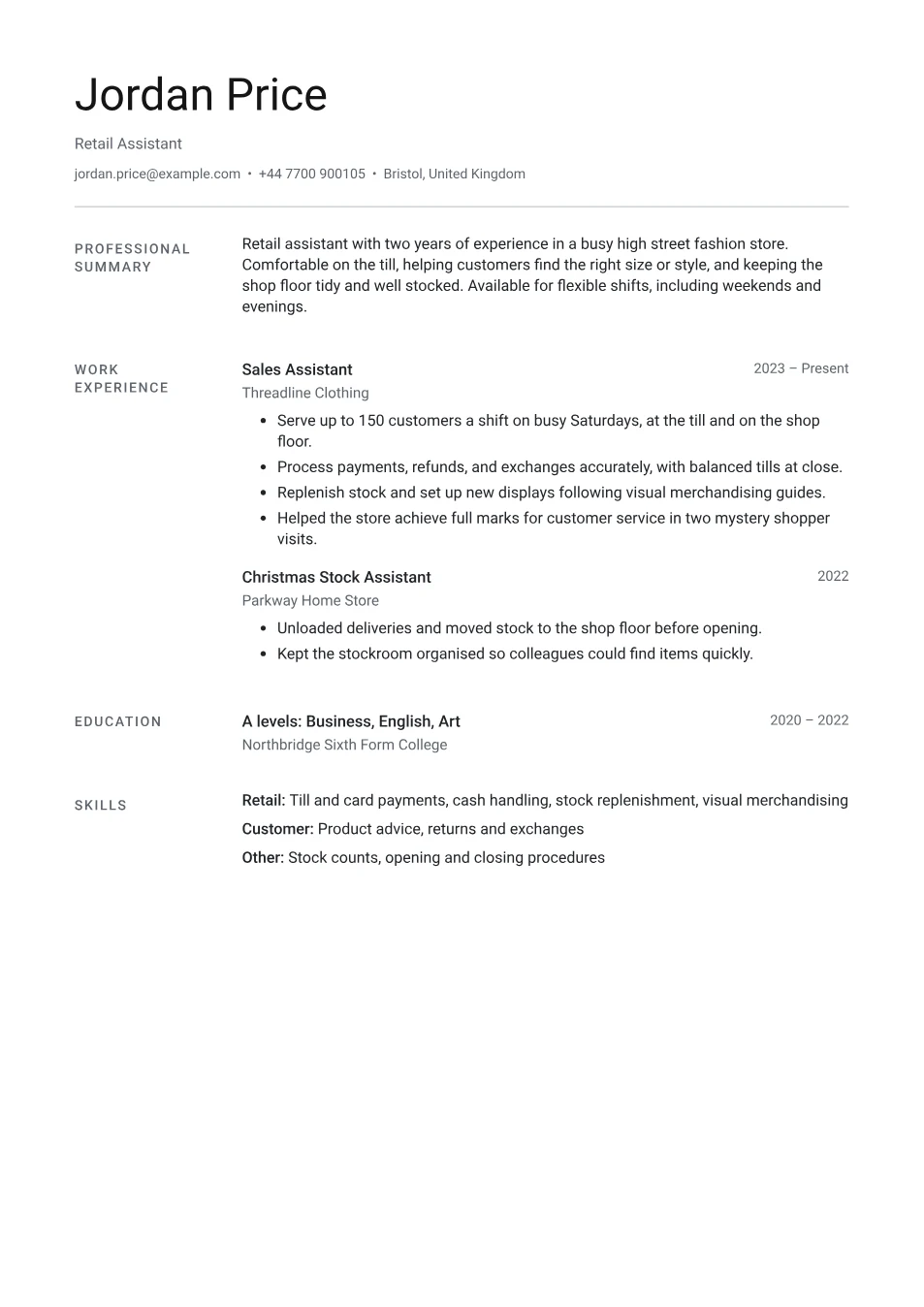
Find skills by listing things you have done
Write a short list of activities from the last year or two. Include coursework, practical projects, regular volunteering, clubs, events, and responsibilities that involved planning or helping people. Describe the action before assigning a skill label to it.
For example, recording equipment loans can involve accurate records; preparing slides for a group presentation can involve clear written communication. The useful evidence is the actual task. Keep its setting visible so the reader understands whether it was coursework, employment, or another activity.
Distinguish practical tools from ways of working
Practical skills include using a spreadsheet, editing an image, speaking a language, or operating a tool you have been trained to use. Ways of working include planning tasks, explaining information, and collaborating. Both can be relevant, but broad personal qualities need examples to carry meaning.
Be specific about your level. Creating a table in Excel is different from building a complex forecasting model. If a skill is still developing, name what you can do rather than applying an expert label. Keep formal certificates accurate and do not imply you hold one because you have studied the topic informally.
| Activity | Skill you might describe | Evidence to include |
|---|---|---|
| Recorded club attendance | Spreadsheet records | The sheet you maintained and checks you made |
| Helped visitors at an event | Visitor communication | Questions answered and directions provided |
| Built a course website | HTML and CSS | The pages and features you completed |
| Planned practice sessions | Scheduling | How you coordinated times and shared updates |
Select skills that help with the advertised work
Read the tasks and requirements in the advert. Pick the skills you have that connect directly, then put the supporting example in a project, activity, or experience entry. A focused list makes it easier to see why you are applying.
Use the skills finder for ideas you may have overlooked. It is a predefined reference library, not an assessment of your ability. Selecting a suggestion does not make it true, so keep only the skills you can explain or demonstrate.
Turn a personal quality into a concrete example
Replace a claim such as organised with a description of what you organised. Mention the shared information, deadline, or routine that made the task useful. You can still list the relevant skill, but the example gives it substance.
Use the bullet point builder if you need help assembling the line. Enter your action and task, add context if useful, and leave the result blank if you cannot support one. The sentence should stay accurate even when someone asks you follow-up questions.
Place the skills where they support the document
Keep a compact skills list near your relevant education or projects. Avoid rating bars that suggest a precision you cannot explain. List languages with honest descriptions of proficiency, and keep a project link only if the employer can open it without requesting access.
Start a CV with no experience to put education and projects before employment. Before sending, check that each skill has an example somewhere in the document and remove anything included only because it sounded impressive.
Frequently asked questions
Can I include skills learned outside a paid job?
Yes. Keep the context clear and show what you did through education, projects, volunteering, or relevant responsibilities.
How many skills should I list?
Use a short, relevant selection that you can support. There is no useful target number if adding more means including weak or unrelated claims.