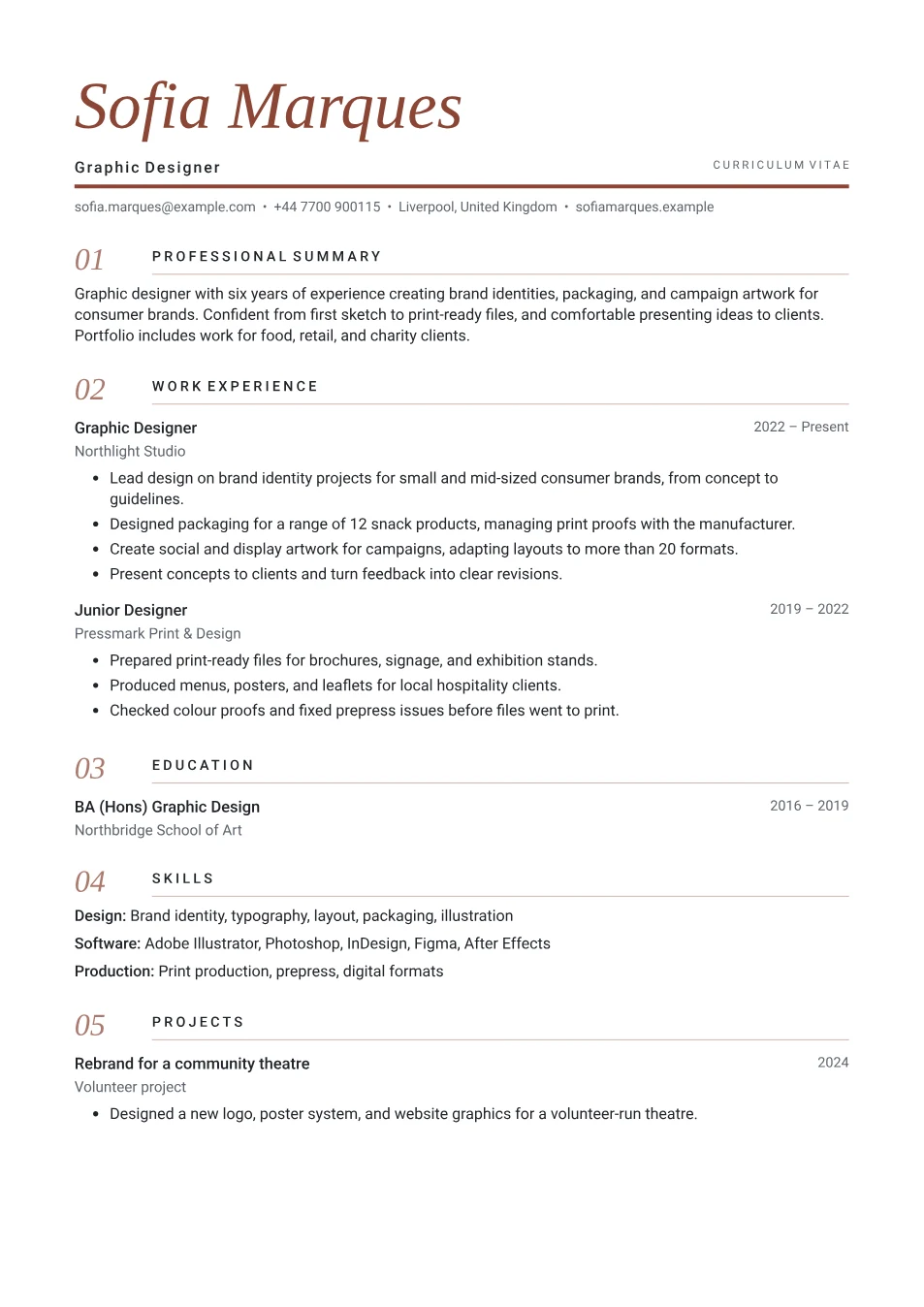
Graphic designer CV profile examples
The profile at the top of a graphic designer CV should tell the reader who you are, what you do well, and what you are looking for, in two to four sentences. The example CV uses the first version below; these alternatives show how the same role reads at different stages.
Graphic designer CV bullet points
Start each point with an action and finish with a result or useful detail. Use these as a model rather than copying them: swap in your own numbers, settings, and tools so every line is true for you.
- Led a brand identity for a regional bakery chain, from workshops to a 40-page brand guideline.
- Designed packaging for 12 snack products, approving print proofs with the manufacturer on time for launch.
- Adapted a campaign’s key artwork to more than 20 social, display, and print formats.
- Presented three concepts per project to clients and turned feedback into focused revisions.
- Built a shared Figma library of templates that cut the time to produce social posts.
- Prepared print-ready files for exhibition stands, checking bleeds, colour profiles, and fonts.
- Worked with copywriters and marketers to plan layouts that put the main message first.
- Mentored a placement student through their first client project.
Use the free resume bullet point builder to structure a line from your own facts.
Skills for a graphic designer CV
Choose the skills that match the job advert and that you can back up with an example from your experience.
Design skills
- Brand identity
- Typography and layout
- Packaging design
- Illustration
- Print production and prepress
- Digital and social formats
Working skills
- Presenting concepts
- Taking and applying feedback
- Understanding a brief
- Managing deadlines
- Collaboration with copy and marketing
Tips for writing a graphic designer CV
Put your portfolio link at the top
Most design employers will look at your portfolio before reading the CV in detail. Add the link to your contact details, check it works, and lead with work relevant to the role.
Describe scope and outcome
For each project, say what you designed, for whom, and what happened next: a launch, a campaign, or a measurable result if you have one. It gives your portfolio pieces context.
Let the CV show taste without hiding information
A considered layout helps, but recruiters and application systems still need to read it. Keep headings clear and text selectable; save the experimental work for your portfolio.
Tailor for studio or in-house roles
Studios look for range and client handling. In-house teams look for brand consistency and working with marketing. Adjust your profile and bullets for each.
The template in this example
This example uses the Atelier template (editorial masthead, numbered chapters). Its creative styling works best when design sense is part of the job, or when you send your CV directly to a person. For formal sectors, a quieter template may be the safer choice. You can switch to any of the 40 templates in the editor without retyping, and change the colour, font, and spacing.