An action verb gives a bullet point a clear beginning, but the rest of the sentence does the explaining. A line beginning with improved is still vague if the reader cannot see what changed or what you did. Choose a precise verb, name the task, and add the context that makes your contribution understandable.
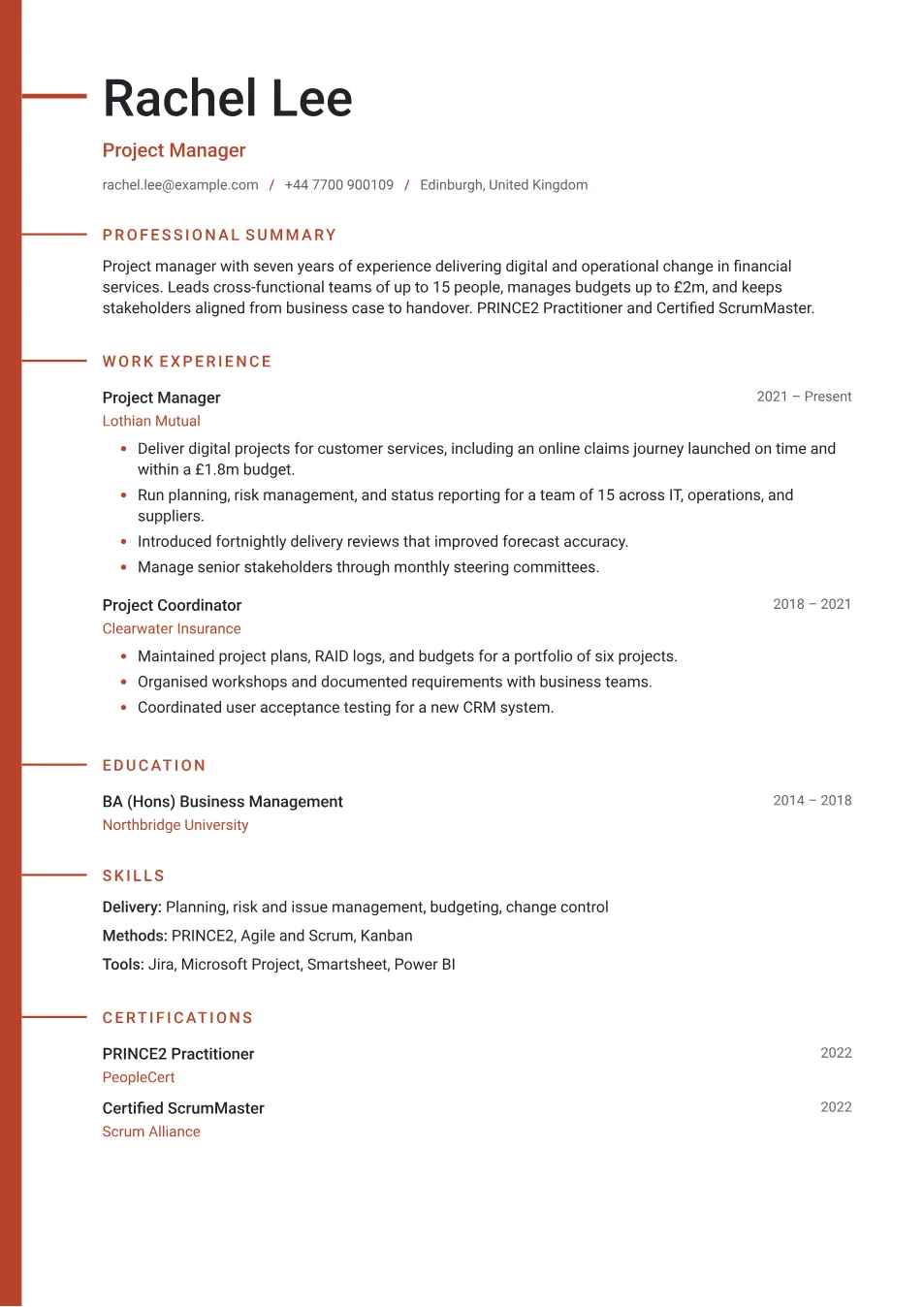
Choose the verb that describes your own part
Use built if you built something, tested if you tested it, and assisted if you supported someone else's work. The goal is precision rather than finding the most forceful word. A contribution can be valuable without suggesting that you owned the entire project.
Write down the activity in ordinary language first. Then remove an opening such as responsible for or duties included if it delays the useful information. Keep the actual task visible instead of replacing it with a broad phrase such as drove excellence.
| Kind of contribution | Possible verbs | Detail to add |
|---|---|---|
| Created something | Built, drafted, designed | What you produced and for whom |
| Checked quality | Tested, reviewed, verified | What you checked and how |
| Helped people | Explained, assisted, resolved | The situation and your response |
| Organised work | Scheduled, recorded, coordinated | The frequency, scope, or users |
Match the tense to when the work happened
Use present tense for an ongoing responsibility and past tense for a completed task. A current role can contain both, but the distinction should make sense: maintain a weekly report for recurring work, built a new report for something completed last month.
Read all the bullets under one job together. Watch for accidental switches caused by copying lines from different drafts. The bullet point builder keeps the verb you enter; it does not infer the date of the work or automatically change your grammar.
Add a detail that helps the reader understand the task
Useful context includes a tool, an audience, a frequency, a type of problem, or a real measure of scale. You do not need every detail in every bullet. Choose the one that explains why this task belongs in the application.
If you lack a measured result, describe the purpose or completion of the work. A working form, an accurate rota, or a documented procedure can be worth mentioning without a fabricated efficiency percentage. Keep any number consistent with your records and your level of responsibility.
Make each bullet contribute something different
Check whether several lines tell the same story. If three bullets all say that you worked with colleagues, keep the strongest example and use the remaining space for another relevant contribution. A shorter list of distinct points is easier to assess than a long list of similar claims.
Read the work experience guide for organising a whole role and browse profession examples for complete documents. Use the examples for structure, not as a source of achievements to copy into your own history.
Check the finished line before using it
Ask whether someone unfamiliar with your workplace would understand the sentence. Explain internal project names or replace them with a description. Remove unnecessary introductions, unexplained abbreviations, and claims that belong to the wider team rather than to you.
Use the free bullet point builder to assemble your own facts, then edit the punctuation and wording. Copy the result into the appropriate experience, project, education, or volunteering entry and check it in the final PDF layout.
Frequently asked questions
Do strong verbs make a resume ATS-friendly?
They can make descriptions clearer, but a verb list does not guarantee compatibility with a hiring system. Keep standard headings and follow the requested file format too.
Should every bullet start with a different verb?
Avoid awkward repetition, but accuracy matters more than using a new synonym for every line. Choose the verb that fits the work.